
Quick Answer
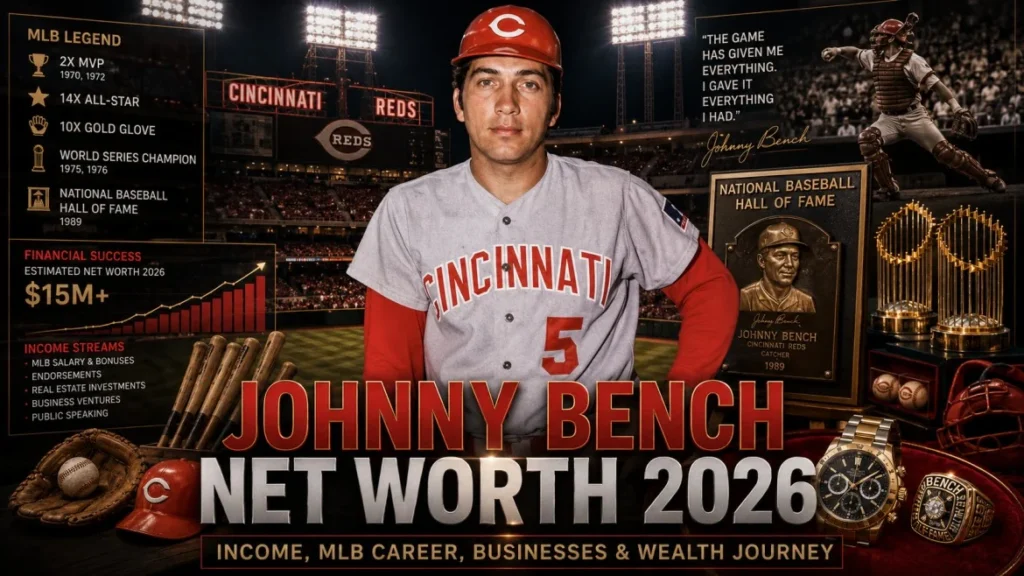
The estimated Johnny Bench net worth in 2026 is between $12 million and $20 million.
Few baseball legends remain as respected across generations as Johnny Bench. Widely considered one of the greatest catchers in Major League Baseball history, Bench built an extraordinary career defined by championships, awards, leadership, and long-term financial success. Decades after his retirement, fans still search for details about Johnny Bench net worth, salary history, business ventures, endorsement income, and the wealth he accumulated during and after his legendary baseball career.
Unlike many modern athletes who benefited from today’s massive sports contracts, Bench played during an era when MLB salaries were far lower. However, his iconic status, smart financial decisions, media appearances, memorabilia value, and continued presence in baseball culture helped him maintain impressive long-term wealth.
Best known for his time with the Cincinnati Reds and the legendary “Big Red Machine” dynasty, Johnny Bench became one of baseball’s most recognizable stars during the 1970s. His influence extended beyond the field as he later built a successful post-retirement career through broadcasting, endorsements, speaking engagements, and business investments.
As of 2026, Johnny Bench’s estimated net worth is believed to range between $12 million and $20 million.
His financial journey reflects not only athletic greatness but also the long-term earning power of iconic sports branding. While younger generations may know him primarily as a Hall of Fame figure, Bench remains one of the most commercially valuable retired baseball legends in American sports history.
Bio Data Table
| Category | Details |
|---|---|
| Full Name | Johnny Lee Bench |
| Known As | Johnny Bench |
| Date of Birth | December 7, 1947 |
| Age in 2026 | 78 Years Old |
| Birthplace | Oklahoma City, Oklahoma, USA |
| Nationality | American |
| Profession | Former Professional Baseball Player |
| MLB Position | Catcher |
| MLB Team | Cincinnati Reds |
| Active Years | 1967–1983 |
| Hall of Fame Induction | 1989 |
| Height | 6 ft 1 in |
| Weight | Approx. 220 lbs |
| Marital Status | Married |
| Children | Yes |
| Religion | Christian |
| Zodiac Sign | Sagittarius |
| Estimated Net Worth 2026 | $12M – $20M |
| Main Income Sources | MLB Earnings, Endorsements, Media |
| Championships | 2 World Series Titles |
| Awards | MVPs, Gold Gloves, All-Star Selections |
| Social Recognition | Baseball Legend & Hall of Famer |
Who Is Johnny Bench?
Johnny Bench is widely regarded as one of the greatest catchers ever to play professional baseball. His legendary MLB career with the Cincinnati Reds transformed him into an American sports icon whose influence continues decades after retirement.
Born in Oklahoma, Bench developed a passion for baseball at a young age. Growing up in a sports-oriented household, he quickly showed exceptional athletic talent and strong leadership abilities.
During his teenage years, scouts recognized his remarkable defensive skills, throwing strength, and offensive potential. These traits eventually led the Reds organization to sign him, beginning what would become one of the most historic careers in MLB history.
Bench’s early career was not instantly glamorous. Like many young athletes, he faced pressure adapting to professional competition. However, his combination of confidence, discipline, and elite talent quickly separated him from other players.
By the late 1960s and early 1970s, he emerged as the face of a dominant Reds dynasty commonly known as the “Big Red Machine.”
His impact went beyond statistics. Bench helped redefine the catcher position with his defensive brilliance, leadership, and offensive production.
Even decades later, younger players and baseball analysts still reference his influence when discussing all-time great catchers.
How Johnny Bench Became Famous
Johnny Bench became famous because he combined elite athletic skill with winning success during one of baseball’s most memorable eras.
His rise accelerated after winning the National League Rookie of the Year award in 1968. Fans immediately recognized him as a future superstar.
Several factors helped elevate his fame:
Key Reasons for Johnny Bench’s Stardom
| Factor | Impact |
|---|---|
| Elite Defensive Ability | Revolutionized catching |
| Powerful Batting | Offensive superstar |
| Leadership | Face of championship teams |
| Big Red Machine Dynasty | National fame |
| Television Exposure | Massive popularity |
| Personality & Charisma | Commercial appeal |
Bench also became highly marketable because he represented professionalism and confidence during baseball’s growing television era.
During the 1970s, he became one of MLB’s most recognizable faces alongside legends like:
- Pete Rose
- Hank Aaron
- Reggie Jackson
His popularity eventually expanded into endorsements, interviews, commercials, and national sports media appearances.
Net Worth Overview in 2026
The estimated Johnny Bench net worth in 2026 ranges between $12 million and $20 million.
Although modern MLB contracts far exceed salaries from Bench’s era, his long-term earning power remained strong because of his legendary reputation and post-retirement opportunities.
Estimated Wealth Breakdown
| Wealth Source | Estimated Value |
|---|---|
| MLB Career Earnings | $5M – $7M |
| Endorsements & Licensing | $2M – $5M |
| Broadcasting & Media | $1M – $3M |
| Memorabilia & Appearances | $1M – $4M |
| Investments & Real Estate | $2M – $6M |
Bench’s financial stability comes largely from:
- Hall of Fame recognition
- long-term licensing value
- autograph demand
- speaking appearances
- media opportunities
Unlike many retired athletes, he successfully maintained public visibility for decades.
Net worth estimates are based on publicly available information and industry analysis.
Wealth Growth Timeline
Early Career Financial Stage
When Bench entered MLB in the late 1960s, baseball salaries were modest compared to modern standards.
Young players often earned relatively limited contracts early in their careers.
Early Career Earnings
| Career StageEstimated Earnings | |
|---|---|
| Rookie Years | Modest MLB salary |
| Early All-Star Phase | Increased contracts |
| Pre-Championship Era | Rising endorsement value |
At the time, endorsements were less common than they are today.
Breakthrough Success Period
Bench’s earnings rose substantially during the peak years of the Big Red Machine dynasty.
Winning championships dramatically increased his commercial value.
Peak Career Growth
| Achievement | Financial Impact |
|---|---|
| MVP Awards | Higher salary leverage |
| World Series Wins | National popularity |
| Gold Gloves | Defensive reputation |
| All-Star Appearances | Brand value increase |
By the mid-1970s, Bench became one of baseball’s most marketable stars.
Expansion Years
After retirement, Bench transitioned successfully into:
- broadcasting
- public speaking
- autograph appearances
- licensing opportunities
This period helped preserve and expand his wealth long after his playing days ended.
Current Financial Position
Today, Johnny Bench remains one of the most respected retired figures in baseball history.
His continued public visibility contributes to:
- memorabilia demand
- sports convention income
- licensing revenue
- media appearances
His brand remains valuable even decades after retirement.
MLB Salary and Career Earnings
During Bench’s playing era, even elite athletes earned far less than today’s baseball stars.
Still, he became one of the higher-paid players of his generation.
Estimated MLB Salary Progression
| Period | Estimated Salary |
|---|---|
| Late 1960s | Under $50K annually |
| Early 1970s | Six-figure earnings |
| Peak Career Years | Among MLB’s top earners |
While these numbers appear small compared to today’s contracts, they were considered elite salaries during that era.
Modern inflation adjustments significantly increase their real-world value.
Business Ventures and Investments
Johnny Bench did not rely solely on baseball salary income.
Over the years, he reportedly expanded into:
- investments
- endorsements
- licensing agreements
- public appearances
Potential Business Categories
| Business Area | Purpose |
|---|---|
| Sports Memorabilia | Licensing income |
| Investments | Wealth preservation |
| Real Estate | Long-term assets |
| Media Partnerships | Ongoing revenue |
Like many retired athletes, maintaining financial discipline played a major role in long-term stability.
Endorsements and Sponsorships
Bench became one of baseball’s early endorsement stars.
During his career, athletes increasingly appeared in television commercials and sports marketing campaigns.
Estimated Sponsorship Categories
| Category | Partnership Type |
|---|---|
| Sporting Goods | Equipment deals |
| Food & Beverage | Commercial campaigns |
| Sports Media | Promotional partnerships |
| Memorabilia Companies | Licensing agreements |
Even after retirement, his autograph and memorabilia value remained extremely strong.
Collectors continue paying premium prices for:
- signed baseballs
- jerseys
- trading cards
- championship memorabilia
Broadcasting and Media Income
Many retired athletes struggle transitioning after sports, but Bench maintained visibility through media work.
Post-Retirement Media Roles
| Media Activity | Financial Benefit |
|---|---|
| Broadcasting | Steady income |
| Interviews | Public relevance |
| Sports Commentary | Brand preservation |
| Television Appearances | Commercial exposure |
His reputation as a respected baseball mind helped him remain relevant to newer generations of fans.
How Baseball Legends Build Long-Term Wealth
Johnny Bench’s financial story reflects how legendary athletes preserve wealth beyond active competition.
Modern retired athletes often generate long-term income through:
- licensing
- speaking engagements
- media work
- collectibles
- personal branding
Long-Term Athlete Wealth Strategies
| Strategy | Financial Impact |
|---|---|
| Hall of Fame Status | Permanent relevance |
| Licensing Deals | Passive income |
| Public Speaking | Appearance fees |
| Memorabilia Sales | Collector demand |
| Media Work | Ongoing visibility |
Bench’s Hall of Fame reputation became one of his greatest financial assets.
Business Strategy and Financial Mindset
Bench’s long-term financial success reflects strategic discipline rather than flashy spending.
Several key factors likely contributed:
- brand protection
- professionalism
- media adaptability
- careful public image management
Key Financial Principles
| Strategy | Benefit |
|---|---|
| Reputation Management | Long-term endorsements |
| Public Visibility | Continued opportunities |
| Investment Stability | Wealth preservation |
| Legacy Branding | Multi-generational value |
Unlike many modern influencers or athletes, Bench built wealth slowly across decades.
Career Achievements and Financial Impact
Johnny Bench’s career accomplishments significantly increased his commercial value.
Major Career Achievements
| Achievement | Financial Impact |
|---|---|
| 2× National League MVP | Superstar status |
| 10× Gold Glove Winner | Defensive legacy |
| 14× All-Star | National popularity |
| 2× World Series Champion | Historic recognition |
| Hall of Fame Induction | Lifetime brand value |
These achievements helped maintain strong memorabilia demand and public respect.
Lifestyle and Assets
Compared to modern celebrity athletes, Bench has generally maintained a more private and traditional lifestyle.
Still, his long career success likely supported substantial assets.
Real Estate Holdings
Real estate has historically been a common investment choice among retired athletes.
Potential Property Assets
| Property Type | Purpose |
|---|---|
| Primary Residence | Long-term living |
| Investment Property | Asset growth |
| Luxury Real Estate | Wealth storage |
Real estate often provides financial stability for retired sports figures.
Cars and Luxury Purchases
Unlike some modern sports celebrities, Johnny Bench has never been widely associated with extravagant luxury spending.
However, successful athletes from his era often invested in:
- luxury vehicles
- collectibles
- sports memorabilia
- comfortable lifestyle assets
Lifestyle Asset Breakdown
| Asset Category | Estimated Level |
|---|---|
| Real Estate | High-value |
| Sports Memorabilia | Significant |
| Luxury Vehicles | Moderate |
| Travel & Lifestyle | Comfortable |
Investments and Ownerships
Long-term wealth preservation likely came from conservative financial management.
Possible Investment Areas
| Investment Type | Purpose |
|---|---|
| Stocks | Portfolio growth |
| Real Estate | Long-term security |
| Licensing Rights | Passive income |
| Business Partnerships | Supplemental earnings |
Many retired athletes from Bench’s generation relied heavily on disciplined investing because playing salaries were smaller than today’s sports contracts.
Comparison With Baseball Legends
Johnny Bench remains one of baseball’s most respected historical figures.
Estimated Net Worth Comparison
| Baseball Legend | Estimated Net Worth 2026 |
|---|---|
| Johnny Bench | $12M – $20M |
| Pete Rose | $3M – $5M |
| Derek Jeter | $200M+ |
| Alex Rodriguez | $350M+ |
| Cal Ripken Jr. | $70M+ |
The comparison highlights how dramatically MLB salaries increased over time.
Challenges, Injuries, and Financial Risks
Like many professional athletes, Bench dealt with physical wear and injuries during his career.
Catching is considered one of baseball’s most demanding positions.
Career Challenges
| Challenge | Impact |
|---|---|
| Physical Injuries | Career strain |
| Era-Limited Salaries | Lower earnings potential |
| Post-Retirement Transition | Income adjustment |
| Market Changes | Different endorsement environment |
Athletes from Bench’s era often faced financial uncertainty because retirement systems and salary structures were less lucrative than today’s MLB environment.
Charity Work and Community Contributions
Johnny Bench has participated in numerous charitable and baseball-related community activities throughout his career and retirement.
Community Contribution Areas
| Cause | Type of Support |
|---|---|
| Youth Baseball | Mentorship |
| Sports Charities | Fundraising |
| Community Events | Public appearances |
| Baseball Development | Advocacy |
His reputation as a respected ambassador for baseball remains strong.
Income Outside Baseball
Bench’s income extended far beyond MLB salary earnings.
Additional Revenue Streams
| Income Source | Revenue Potential |
|---|---|
| Public Speaking | High |
| Sports Conventions | Medium–High |
| Autograph Signings | Strong |
| Media Appearances | Moderate |
| Licensing Deals | Long-term |
Sports legends often continue earning substantial income decades after retirement due to historical significance.
Why Johnny Bench’s Brand Still Matters
One of the most fascinating aspects of Johnny Bench’s financial legacy is the lasting power of his reputation.
Many retired athletes fade from public relevance over time. Bench, however, remains deeply connected to baseball history.
Reasons His Brand Endures
| Factor | Long-Term Value |
|---|---|
| Hall of Fame Status | Permanent recognition |
| Big Red Machine Legacy | Historical importance |
| Generational Respect | Continued demand |
| Memorabilia Market | Strong collector value |
His name remains synonymous with elite catching excellence.
Future Net Worth Prediction
Johnny Bench’s wealth is expected to remain relatively stable due to his legendary sports status.
Estimated Future Wealth Projection
| Year | Estimated Net Worth |
|---|---|
| 2026 | $12M – $20M |
| 2027 | $13M – $21M |
| 2028 | $13M – $22M |
| 2029 | $14M – $23M |
| 2030 | $15M – $25M |
Future value growth will likely come from:
- memorabilia appreciation
- licensing
- continued public appearances
- media relevance
FAQs
What is Johnny Bench net worth in 2026?
Johnny Bench’s estimated net worth in 2026 ranges between $12 million and $20 million based on MLB earnings, endorsements, investments, media appearances, and memorabilia-related income.
How did Johnny Bench make his money?
Bench earned wealth through professional baseball salary income, endorsements, broadcasting, licensing deals, autograph signings, speaking engagements, and investments.
Was Johnny Bench one of the highest-paid MLB players?
During his era, Johnny Bench was considered one of baseball’s top stars and among the higher-paid players of the 1970s.
What teams did Johnny Bench play for?
Johnny Bench spent his entire MLB career with the Cincinnati Reds.
Why is Johnny Bench considered a baseball legend?
Bench revolutionized the catcher position through elite defense, leadership, and offensive production while helping lead the Big Red Machine dynasty.
Does Johnny Bench still earn money after retirement?
Yes. Bench continues earning income through public appearances, memorabilia licensing, autograph signings, and media opportunities.
Is Johnny Bench in the Hall of Fame?
Yes. Johnny Bench was inducted into the National Baseball Hall of Fame and Museum in 1989.
Conclusion
Johnny Bench built far more than a legendary baseball career. He built a lasting sports legacy that continues generating cultural and financial value decades after retirement.
His estimated net worth in 2026 reflects a combination of athletic greatness, smart career management, enduring public respect, and the timeless commercial power of baseball history.
Although athletes today earn dramatically larger contracts, Bench’s influence on the game remains priceless. His leadership during the Big Red Machine era helped shape one of baseball’s greatest dynasties, while his Hall of Fame status secured permanent recognition among sports legends.
More importantly, his financial journey demonstrates how reputation, professionalism, and legacy branding can create wealth that lasts long after athletic competition ends.
Whether viewed as one of the greatest catchers ever, a baseball ambassador, or a sports business success story, Johnny Bench remains one of the most iconic figures in MLB history.
Read More related Articles:
- Taron Egerton Net Worth: How Rich Is He Now In 2026
- Tyrod Taylor Net Worth: Salary, Career Earnings In 2026
- Brittany Force Net Worth: Earnings, Salary & Wealth In 2026

Evan Carter is a writer at worthflux.com who explores net worth, earnings, and career trajectories. He dives deep into financial data to reveal the story behind the numbers. Evan’s approach is analytical yet approachable, making complex wealth patterns easy to understand. He aims to provide readers with clear insights into how financial success is built and maintained.