
Quick Answer
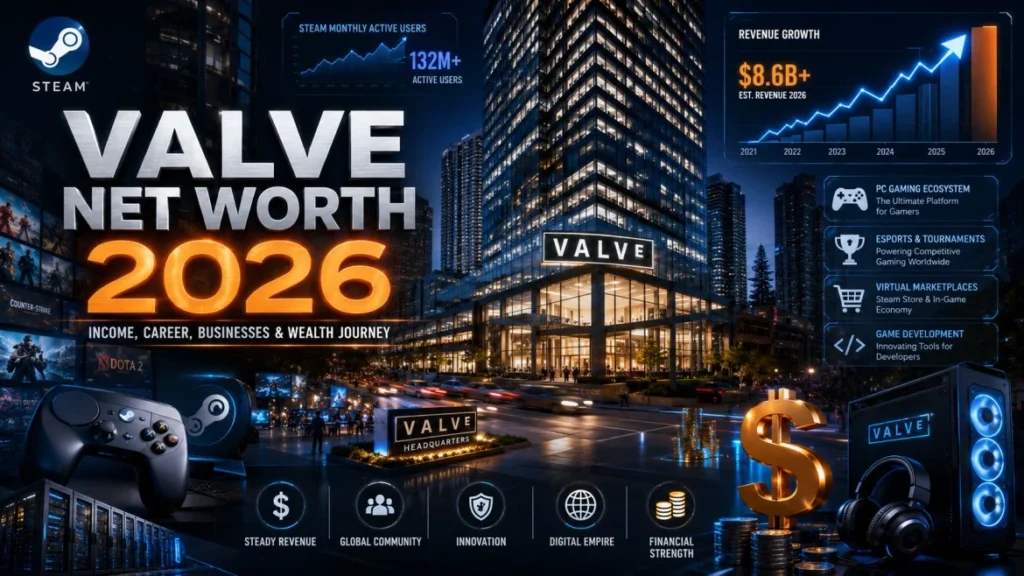
Valve net worth in 2026 is estimated to range between $12 billion and $18 billion, based on industry analysis, Steam marketplace dominance, game revenues, licensing, and digital platform income.
People have been fascinated by the financial power of gaming companies for years, but few names generate as much curiosity as Valve Corporation. The company behind Steam, Counter-Strike, Half-Life, and Dota 2 has quietly built one of the most profitable businesses in the gaming industry without operating like a traditional public corporation.
Unlike major publicly traded gaming giants that release detailed earnings reports every quarter, Valve remains privately owned. That secrecy has only increased interest in Valve net worth in 2026. Fans, investors, and industry analysts constantly speculate about how much the company earns from Steam, game sales, digital items, esports ecosystems, and hardware products like the Steam Deck.
By 2026, Valve is widely estimated to be worth tens of billions of dollars, making it one of the most financially successful private gaming companies in the world. Its influence extends far beyond game development. Steam alone dominates PC gaming distribution globally, creating a massive recurring revenue stream that continues to expand every year.
Bio Data Table
| Category | Details |
|---|---|
| Full Name | Valve Corporation |
| Founded | August 24, 1996 |
| Age in 2026 | 30 Years |
| Headquarters | Bellevue, Washington, USA |
| Nationality | American |
| Profession | Video Game Developer & Digital Distribution Company |
| Founders | Gabe Newell and Mike Harrington |
| Industry | Gaming & Technology |
| Major Products | Steam, Half-Life, Counter-Strike, Dota 2 |
| Popular Hardware | Steam Deck, Valve Index |
| Marital Status | Not Applicable |
| Children | Not Applicable |
| Education | Founded by former Microsoft employees |
| Religion | Not Publicly Disclosed |
| Zodiac Sign | Not Applicable |
| Active Years | 1996–Present |
| Estimated Net Worth | $12 Billion–$18 Billion |
| Main Income Sources | Steam Revenue, Game Publishing, Marketplace Fees, Hardware Sales |
| Social Media Presence | Steam Community, YouTube, X/Twitter, Gaming Platforms |
Who Is Valve?
Valve Corporation began as a relatively small gaming studio founded by former Microsoft employees Gabe Newell and Mike Harrington in 1996. At the time, the gaming industry looked completely different from today. Physical discs dominated game sales, online gaming was still developing, and digital distribution barely existed.
Valve entered the market with a bold vision and quickly gained recognition after releasing the groundbreaking game Half-Life in 1998. The game changed storytelling standards in first-person shooters and established Valve as a major creative force.
What separated Valve from many competitors was its willingness to experiment. Instead of simply creating games, the company focused on building ecosystems. That strategy eventually led to the launch of Steam in 2003.
Initially, Steam faced criticism from gamers who disliked mandatory online activation. However, over time, the platform evolved into the dominant PC gaming marketplace globally. Today, millions of players use Steam daily to buy games, interact with communities, trade digital items, and participate in multiplayer ecosystems.
Valve’s early struggles were typical for tech startups. The company operated in a highly competitive market where large publishers controlled distribution. Yet its innovative approach to online infrastructure, multiplayer systems, and community-driven gaming allowed it to grow rapidly.
The company’s culture also became famous within Silicon Valley and gaming circles. Valve adopted a flat corporate structure with minimal traditional management. Employees were encouraged to pursue creative ideas rather than follow rigid hierarchies.
This unconventional style helped Valve maintain a reputation for innovation while simultaneously becoming one of the most profitable gaming companies per employee in the world.
Valve Net Worth Overview in 2026
Valve net worth in 2026 is estimated between $12 billion and $18 billion, although some analysts believe the real valuation could be even higher if the company were publicly traded.
The largest contributor to Valve wealth is Steam. Industry experts estimate that Steam controls a major share of the global PC gaming distribution market. Every game sold on the platform generates commission revenue for Valve, typically around 20% to 30% depending on sales volume agreements.
In addition, Valve earns substantial income from:
- In-game cosmetic items
- Marketplace transaction fees
- Esports ecosystems
- Hardware devices
- Licensing agreements
- Publishing royalties
- Subscription-style services
Because Valve is privately owned, precise financial data is unavailable. However, analysts consistently rank the company among the most valuable private gaming firms globally.
Net worth estimates are based on publicly available information and industry analysis.
Valve’s financial reputation also benefits from its low employee count relative to revenue. Unlike many massive corporations employing tens of thousands of workers, Valve reportedly operates with a comparatively lean workforce while generating enormous annual income.
The company is often viewed as one of the smartest long-term businesses in gaming because it built infrastructure instead of relying solely on individual game releases.
Wealth Growth Timeline
Early Career Financial Stage
In the late 1990s, Valve was primarily known as a game development studio. Revenue came mostly from boxed sales of Half-Life and expansion packs.
Although successful, the company’s financial power was still modest compared to major publishers like Electronic Arts.
Breakthrough Success Period
Valve’s financial breakthrough came with Steam. While many companies initially underestimated digital distribution, Valve recognized its long-term potential early.
As broadband internet expanded worldwide, Steam became increasingly dominant. Popular games like:
- Counter-Strike
- Team Fortress 2
- Portal
- Dota 2
helped attract millions of users to the platform.
Expansion Years
During the 2010s and early 2020s, Valve expanded beyond software. The company entered:
- Virtual reality
- Hardware development
- Handheld gaming devices
- Esports
- Digital marketplaces
The launch of the Steam Marketplace created a highly profitable microtransaction economy where players traded cosmetic items and skins.
Counter-Strike skins alone became a massive digital economy worth billions collectively across the community ecosystem.
Current Financial Position
By 2026, Valve stands as one of gaming’s most financially powerful private companies.
Its business model generates recurring revenue daily through:
- Steam sales
- Marketplace fees
- Game publishing
- Hardware
- User-generated transactions
Unlike traditional entertainment companies, Valve benefits from continuous platform engagement rather than depending only on blockbuster releases.
Main Income Sources
Primary Career Earnings
Valve’s primary earnings come from Steam commissions.
Whenever players purchase games through Steam, Valve receives a percentage of the transaction. Considering the platform hosts thousands of games and millions of active users, this creates enormous recurring revenue.
Additional primary income sources include:
| Revenue Source | Estimated Contribution |
|---|---|
| Steam Store Commissions | Very High |
| First-Party Game Sales | High |
| Marketplace Transactions | High |
| DLC & Cosmetic Sales | High |
| Licensing | Moderate |
| Hardware Sales | Moderate |
The company’s profitability is strengthened by digital distribution, which avoids many physical retail costs.
Business Ventures and Investments
Valve business ventures extend well beyond game development.
The company has invested heavily in:
- Virtual reality technology
- Gaming hardware
- Cloud infrastructure
- Digital marketplaces
- Esports ecosystems
The release of the Steam Deck significantly expanded Valve’s hardware footprint. The device became popular among PC gamers seeking portable access to Steam libraries.
Valve also developed the Valve Index, further strengthening its position in VR technology.
Because Valve is privately owned, analysts believe the company also holds significant investment reserves and private assets.
Sponsorships and Brand Deals
Valve does not rely heavily on traditional sponsorships like influencers or celebrities. However, the company earns indirectly through partnerships and esports branding.
Major tournaments connected to Dota 2 and Counter-Strike generate sponsorship opportunities involving:
- Gaming brands
- Hardware companies
- Streaming platforms
- Event partnerships
Events like The International have become some of the biggest esports competitions in the world.
Social Media and Digital Revenue
Valve’s digital ecosystem generates enormous online engagement.
Revenue sources connected to digital audiences include:
- Steam Community engagement
- Marketplace transactions
- Streaming visibility
- YouTube esports content
- Creator collaborations
Even though Valve itself maintains a relatively reserved public presence, its games dominate platforms like:
- YouTube
- TikTok
- Twitch
This visibility continuously strengthens Valve income and brand value.
Business Strategy and Financial Mindset
Valve’s financial success is deeply connected to its unconventional business strategy.
Instead of chasing short-term trends, the company focused on infrastructure and long-term ecosystems. Steam became valuable because it created convenience for both players and developers.
Several factors define Valve’s financial mindset:
Long-Term Thinking
Valve consistently invests in technologies that may take years to mature. Virtual reality is a strong example.
Platform Ownership
Owning Steam gives Valve tremendous control over distribution and recurring revenue.
Community-Driven Ecosystems
Valve games encourage player engagement through:
- Mods
- Community marketplaces
- Cosmetics
- User-generated content
Limited Public Pressure
Because Valve is private, it avoids quarterly shareholder pressure. This allows the company to prioritize strategic growth instead of short-term stock performance.
Career Achievements and Financial Impact
Valve’s achievements transformed gaming history.
Some of the company’s most important milestones include:
| Achievement | Financial Impact |
|---|---|
| Launch of Half-Life | Established studio reputation |
| Creation of Steam | Massive recurring revenue |
| Rise of Counter-Strike | Competitive gaming dominance |
| Dota 2 Esports Growth | Global sponsorship ecosystem |
| Steam Deck Release | Hardware market expansion |
| VR Innovation | Future technology positioning |
Valve games have won numerous awards for innovation, storytelling, multiplayer design, and community engagement.
Steam’s dominance also changed how independent developers distribute games globally.
Without Valve, modern PC gaming would likely look very different.
Lifestyle and Assets
Real Estate Holdings
Valve itself owns valuable corporate assets and operational properties.
Its headquarters in Bellevue, Washington, reflects the company’s high-value position within the tech industry.
Because the company is private, detailed property ownership information remains limited. However, industry experts believe Valve maintains significant real estate and infrastructure investments connected to technology operations.
Cars and Luxury Purchases
Unlike flashy entertainment brands, Valve maintains a relatively low-profile public image.
The company culture emphasizes innovation more than luxury marketing. Still, founder Gabe Newell is known to possess substantial personal wealth.
Valve wealth is primarily associated with:
- Technology investments
- Corporate infrastructure
- Gaming ecosystems
- Digital assets
rather than celebrity-style luxury exposure.
Investments and Ownerships
Valve’s strongest asset remains Steam.
The platform itself functions as a digital empire with enormous long-term value.
Additional ownership areas include:
- Gaming IPs
- Software infrastructure
- VR technology
- Hardware systems
- Marketplace economies
Valve’s ownership of iconic franchises gives the company lasting intellectual property value that continues generating revenue years after release.
Comparison With Similar Industry Figures
Valve’s estimated valuation places it among elite gaming companies.
| Company | Estimated Value |
|---|---|
| Valve Corporation | $12B–$18B |
| Epic Games | $30B+ |
| Roblox Corporation | $20B+ |
| Electronic Arts | $35B+ |
| Ubisoft | Lower than peak valuations |
Although Valve’s valuation may appear lower than some public gaming giants, the company’s profitability per employee is extraordinarily high.
Many analysts argue Valve could achieve an even larger valuation if it ever pursued a public stock offering.
Challenges, Controversies, and Financial Risks
Despite its success, Valve faces several challenges.
Competition
Major competitors continue investing in digital distribution platforms.
Companies like Epic Games aggressively challenge Steam’s dominance with exclusive releases and lower developer fees.
Regulatory Risks
Digital marketplaces increasingly face scrutiny regarding:
- Platform monopolies
- Data privacy
- Consumer protection
- Marketplace regulations
Community Criticism
Valve has occasionally been criticized for:
- Limited communication
- Slow game updates
- Marketplace moderation issues
Industry Volatility
Gaming trends evolve rapidly. Maintaining long-term relevance requires constant innovation.
Still, Valve’s strong infrastructure gives it stability compared to companies relying only on annual game releases.
Charity Work and Social Contributions
Valve and its leadership have contributed to charitable causes over the years, particularly within:
- Technology education
- Gaming communities
- Medical support initiatives
- Disaster relief efforts
Founder Gabe Newell has also supported research and innovation programs.
Additionally, Valve’s esports events often promote community-driven fundraising and charitable participation.
While the company is not as publicly philanthropic as some tech giants, it has contributed positively to gaming communities worldwide.
Income Outside Main Profession
Valve earns revenue from several sources beyond traditional game sales.
Licensing
Valve licenses its intellectual property for merchandise, collaborations, and media opportunities.
Hardware Ecosystems
Steam Deck and VR products represent growing non-software income.
Marketplace Transactions
Steam Community Market fees generate substantial passive revenue.
Media and Streaming Exposure
Valve-owned games dominate streaming ecosystems, indirectly boosting platform engagement and purchases.
Esports
Professional tournaments connected to Dota 2 and Counter-Strike create advertising, sponsorship, and event-related revenue opportunities.
Future Net Worth Prediction
Valve’s financial future appears extremely strong due to the continued growth of digital gaming.
| Year | Estimated Net Worth |
|---|---|
| 2026 | $12B–$18B |
| 2027 | $14B–$20B |
| 2028 | $16B–$22B |
| 2029 | $18B–$25B |
| 2030 | $20B–$28B |
Several factors could increase Valve net worth significantly:
- Growth of handheld gaming
- Expansion of VR technology
- Steam marketplace growth
- AI-powered gaming infrastructure
- Cloud gaming opportunities
If Steam continues dominating PC gaming distribution, Valve’s valuation could rise substantially over the next decade.
FAQs
What is Valve net worth in 2026?
Valve net worth in 2026 is estimated between $12 billion and $18 billion based on Steam revenue, gaming assets, and industry analysis.
How does Valve make money?
Valve earns money through Steam commissions, game sales, marketplace fees, esports events, hardware sales, and licensing.
Who owns Valve?
Valve is privately owned, primarily associated with co-founder Gabe Newell and company leadership.
Is Steam Valve’s biggest income source?
Yes. Steam is widely considered Valve’s largest and most profitable revenue generator.
Does Valve own Counter-Strike?
Yes. Valve owns the Counter-Strike franchise along with several other major gaming properties.
How profitable is Valve?
Valve is considered one of the most profitable gaming companies per employee in the industry.
Could Valve become a public company?
Although possible, Valve has shown little interest in becoming publicly traded so far.
Conclusion
Valve’s financial journey is one of the most fascinating success stories in modern gaming. What began as a small development studio evolved into a digital powerhouse that transformed how games are distributed, played, and monetized.
Valve net worth in 2026 reflects more than just game sales. The company built a global ecosystem powered by Steam, esports, marketplaces, hardware innovation, and long-term strategic thinking.
Unlike many corporations that depend heavily on constant media attention, Valve operates quietly while generating enormous influence across the gaming industry. Its ability to adapt, innovate, and maintain platform dominance continues to strengthen its financial future.
As digital gaming expands worldwide, Valve’s position appears remarkably strong. Whether through Steam, virtual reality, esports, or hardware, the company remains deeply connected to the future of gaming technology.
While exact numbers remain private, one thing is clear: Valve wealth and influence will likely continue growing for years to come.
Disclaimer:
Net worth figures mentioned in this article are estimates based on publicly available information, industry reports, market trends, and financial analysis. Actual financial data may vary because Valve is a privately owned company.
Read More Related Articles:
- Matt Ryan Net Worth: Salary, Career Earnings & Wealth In 2026
- Howard Schultz Net Worth: Starbucks Billionaire Fortune In 2026
- Howie Roseman Net Worth: Salary, Career & Wealth In 2026

Olivia Harper is a financial writer at Worthflux.com, where she covers net worth profiles and income breakdowns with a detail-focused approach. She specializes in researching financial backgrounds, career paths, and wealth progression over time. Her writing prioritizes accuracy, balance, and clear explanation. Olivia aims to give readers a grounded view of how financial success develops.