
💰 Quick Answer:
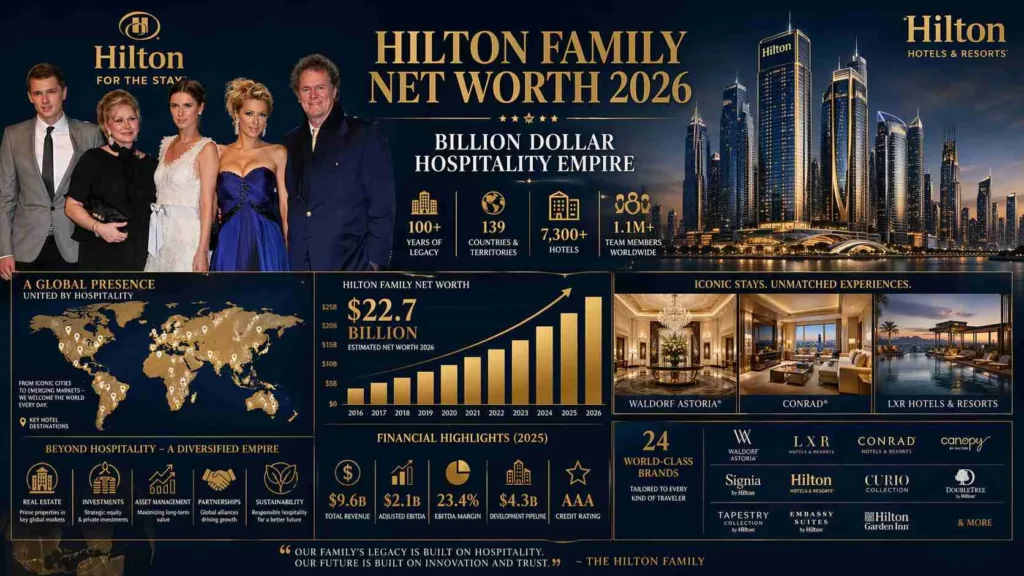
As of 2026, the Hilton family net worth is estimated at $4 billion to $5+ billion, built through the global hotel empire founded by Conrad Hilton and expanded across generations.
The Hilton family net worth represents one of the most iconic wealth stories in American business history. The Hilton name is globally recognized through luxury hotels, resorts, and hospitality services that span continents.
The family’s fortune began with one man’s vision Conrad Hilton, the founder of Hilton Hotels and has since evolved into a multi-billion-dollar legacy that continues to influence global hospitality markets today.
Unlike modern celebrity wealth, the Hilton fortune is rooted in long-term business ownership, real estate, branding, and hospitality expansion. Over generations, the family has maintained influence in both business and pop culture, with members like Paris Hilton bringing global attention to the name.
This article breaks down the real structure of the Hilton family wealth, how it grew, who controls it today, and what it is worth in 2026.
Bio Data Table
| Attribute | Details |
|---|---|
| Family Name | Hilton Family |
| Founder | Conrad Hilton |
| Industry | Hospitality / Hotels |
| Origin | United States |
| Headquarters Influence | Global |
| Main Company | Hilton Hotels & Resorts |
| Net Worth (2026) | $4B – $5B+ |
| Key Members | Barron Hilton, Paris Hilton, family heirs |
| Famous For | Global hotel empire |
| Wealth Source | Hotels, real estate, licensing |
| Business Type | Public + private holdings |
Who Are the Hilton Family?
The Hilton family is one of the most influential business dynasties in modern history. The foundation was laid by Conrad Hilton, who purchased his first hotel in 1919 in Texas. From that moment, the Hilton brand began expanding aggressively across the United States and later across the world.
Over time, Hilton Hotels became a symbol of luxury, travel, and international hospitality. The business grew into one of the largest hotel chains globally, with thousands of properties across different countries.
The family’s wealth is not just tied to one company but includes decades of investments, real estate holdings, brand licensing, and corporate expansion.
Today, the Hilton legacy is both a business empire and a cultural brand, strengthened further by media visibility through modern family members.
Hilton Family Net Worth Overview
As of 2026, the Hilton family net worth is estimated between $4 billion and $5 billion. This wealth is distributed across multiple branches of the family and tied to both public and private assets.
Key contributors to this valuation include:
- Ownership and historical equity in Hilton Hotels
- Real estate holdings across the United States and globally
- Brand licensing and hotel management contracts
- Investment portfolios managed by heirs
While the Hilton Hotel chain itself is publicly traded and owned by institutional shareholders, the family still benefits from legacy wealth, early equity sales, and diversified investments.
Net Worth Growth Timeline
Early Foundation Era
The Hilton fortune began in the early 1900s when Conrad Hilton purchased small hotels in Texas. His strategy was simple but powerful: acquire struggling hotels, improve operations, and scale aggressively.
This phase laid the foundation for what would become a global hospitality empire.
Expansion Phase
By the mid-20th century, Hilton Hotels expanded internationally. The company became synonymous with luxury travel and business hospitality. This expansion significantly increased the family’s wealth and influence.
During this time:
- Hilton Hotels went public
- International properties were developed
- Brand recognition became global
Corporate Maturity Phase
As Hilton Hotels matured into a global corporation, the family’s role shifted from operational control to strategic ownership and investment management.
Key developments included:
- Stock market growth
- Acquisition of hotel portfolios
- Expansion into luxury and budget segments
Modern Era (2000–2026)
In recent decades, the Hilton family wealth has been influenced by:
- Sale and restructuring of equity stakes
- Real estate investments
- Brand licensing revenue
- Media exposure through family members like Paris Hilton
Today, the wealth is stable and diversified rather than rapidly growing.
Main Sources of Income
Hotel Empire Revenue
The primary source of Hilton family wealth comes from the global hotel industry. Hilton Hotels operates thousands of properties worldwide, generating revenue from:
- Room bookings
- Events and conferences
- Luxury hospitality services
- Franchise agreements
Even though the company is publicly traded, the Hilton legacy continues to benefit from historical ownership and branding influence.
Real Estate Holdings
Real estate has always been a core pillar of the Hilton fortune. The family has historically owned:
- Luxury hotels
- Commercial properties
- Development land investments
These assets have appreciated significantly over time, contributing to long-term wealth stability.
Brand Licensing & Royalties
The Hilton name is a global brand. Licensing agreements allow Hilton-branded hotels and services to operate worldwide. This creates consistent revenue streams tied to:
- Brand usage fees
- Franchise agreements
- Management contracts
Investments & Financial Portfolios
Over generations, Hilton heirs have diversified into:
- Stocks
- Private equity
- Venture investments
- Trust funds
These investments help maintain and grow family wealth outside hospitality.
Business Strategy Behind the Wealth
The Hilton family wealth strategy is built on long-term ownership and branding power. Key principles include:
- Expanding into global hospitality markets early
- Maintaining brand consistency across countries
- Leveraging real estate as a core asset class
- Diversifying wealth across generations
Unlike short-term business models, Hilton wealth is built for longevity, not rapid gains.
Awards, Legacy & Financial Impact
While the Hilton family is not defined by awards, their economic impact is enormous:
- Created one of the largest hotel chains in the world
- Revolutionized global hospitality standards
- Established franchise models used worldwide
The financial impact of these achievements continues to generate billions in global revenue annually.
Assets & Lifestyle
Real Estate
The Hilton family owns and has historically owned:
- Luxury hotels across major cities
- High-value residential properties
- Commercial real estate investments
Real estate remains a cornerstone of their wealth structure.
Luxury Lifestyle
Members of the Hilton family are known for luxury living, including:
- High-end properties
- Designer fashion
- Private travel and hospitality access
However, lifestyle varies widely between family members depending on individual wealth shares.
Investments
Beyond real estate, the family invests in:
- Private equity funds
- Hospitality startups
- Stock market portfolios
These investments ensure long-term financial sustainability.
Net Worth Comparison (Industry Context)
| Family / Group | Net Worth |
|---|---|
| Hilton Family | $4B – $5B+ |
| Marriott Family Influence | Similar billion-dollar range |
| Hyatt Family Influence | Multi-billion range |
| Top global hospitality dynasties | Billion-dollar tier |
The Hilton family remains one of the most recognizable hospitality dynasties globally.
Controversies, Challenges & Financial Risks
Like many wealthy families, the Hiltons have faced:
- Internal inheritance distribution complexity
- Corporate restructuring and equity dilution
- Public scrutiny due to celebrity exposure
- Market fluctuations in hospitality industry
Despite this, the core family wealth remains strong and diversified.
Philanthropy & Social Impact
The Hilton family has contributed significantly to philanthropy through:
- The Conrad N. Hilton Foundation
- Global humanitarian programs
- Education and poverty relief initiatives
- Disaster response funding
These efforts reflect the family’s commitment to global social impact alongside business success.
How the Hilton Family Makes Money Outside Hotels
Beyond hospitality, the family earns through:
- Trust funds and inheritance structures
- Private investments
- Media and entertainment exposure (especially modern family members)
- Brand collaborations and licensing
This diversification helps maintain financial stability across generations.
Future Net Worth Projection
The Hilton family wealth is expected to remain stable or grow moderately due to:
- Continued global travel demand
- Expansion of luxury hospitality markets
- Strong brand recognition
- Investment portfolio growth
Projected net worth by 2030:
$5B – $6.5B, depending on global economic conditions.
FAQs
1. What is the Hilton family net worth in 2026?
The Hilton family net worth is estimated at $4 billion to $5+ billion.
2. How did the Hilton family get rich?
They built wealth through Hilton Hotels, one of the world’s largest hospitality chains.
3. Does the Hilton family still own hotels?
They retain legacy influence and investments, but most operations are publicly owned or franchised.
4. Is Paris Hilton part of the wealth?
Yes, but her personal wealth is separate from the core Hilton family fortune.
5. What is the main source of Hilton wealth today?
Hospitality, real estate, licensing, and long-term investments.
6. Will the Hilton family wealth grow?
Yes, but at a steady pace due to mature business structure.
Conclusion
The Hilton family net worth is a powerful example of generational wealth built on vision, branding, and real estate dominance. From Conrad Hilton’s first hotel purchase to a global empire spanning thousands of properties, the family has shaped modern hospitality history.
In 2026, their wealth remains strong at an estimated $4–5 billion, supported by diversified investments and a globally recognized brand. Unlike many fortunes, the Hilton legacy is built to last rooted in business structure, not short-term trends.

Olivia Harper is a financial writer at Worthflux.com, where she covers net worth profiles and income breakdowns with a detail-focused approach. She specializes in researching financial backgrounds, career paths, and wealth progression over time. Her writing prioritizes accuracy, balance, and clear explanation. Olivia aims to give readers a grounded view of how financial success develops.