Quick Answer
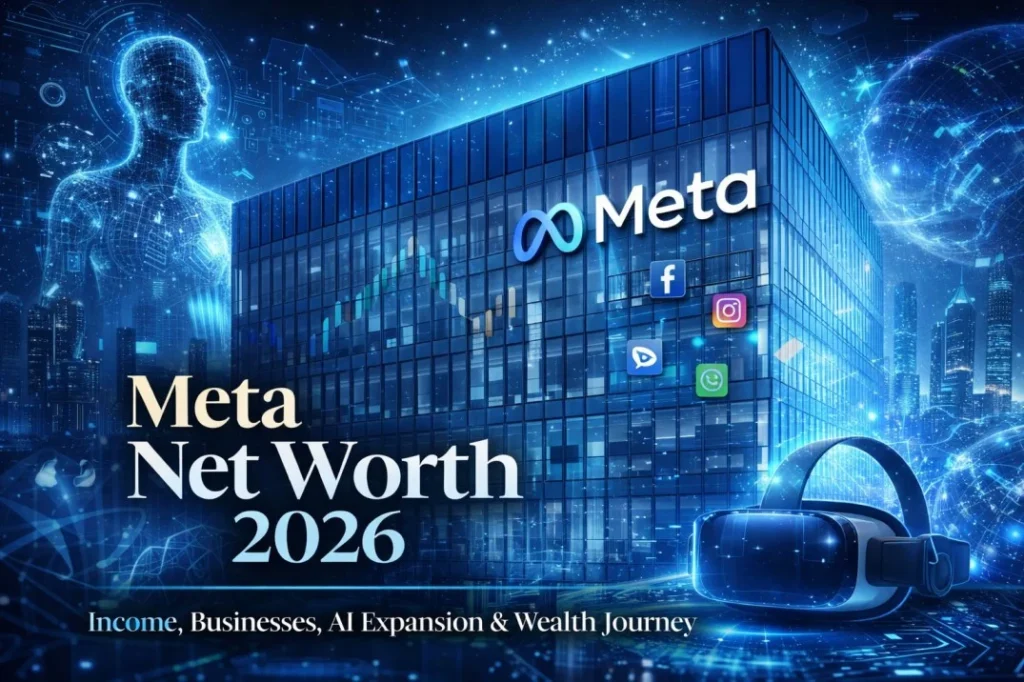
As of 2026, Meta net worth is estimated to be valued at approximately $1.4 trillion to $1.7 trillion based on market capitalization, business assets, cash reserves, and investment strength.
The company earns billions through digital advertising, AI services, virtual reality products, social media platforms, and strategic investments. Its primary income sources include:
- Digital advertising revenue
- Instagram monetization
- Facebook ad ecosystem
- AI and metaverse investments
- Virtual reality hardware
- Subscription and creator tools
- Business communication services
Bio Data Table
| Detail | Information |
|---|---|
| Full Name | Meta Platforms Inc. |
| Former Name | Facebook Inc. |
| Founded | February 4, 2004 |
| Founder | Mark Zuckerberg |
| Headquarters | Menlo Park, California, USA |
| Nationality | American Company |
| Industry | Technology & Social Media |
| Main Businesses | Facebook, Instagram, WhatsApp, Threads, Reality Labs |
| CEO | Mark Zuckerberg |
| Employees | Over 80,000 globally |
| Active Years | 2004–Present |
| Estimated Net Worth 2026 | $1.4–$1.7 Trillion |
| Main Income Sources | Advertising, AI, VR, Digital Platforms |
| Stock Symbol | META |
| Major Platforms | Facebook, Instagram, WhatsApp, Threads |
| Main Market | Global Digital Advertising |
| Ownership Type | Publicly Traded Company |
| Education of Founder | Harvard University (Dropped Out) |
| Religion | Not Publicly Defined |
| Social Media Presence | Facebook, Instagram, Threads, LinkedIn, YouTube |
Who Is Meta?
Meta Platforms Inc. began as a simple social networking website created by Mark Zuckerberg and several classmates at Harvard University. What started in a college dorm room eventually became one of the most influential technology companies in modern history.
Originally launched as Facebook in 2004, the platform quickly gained popularity among university students before expanding worldwide. Over the years, the company acquired major digital platforms including Instagram and WhatsApp, helping Meta build an enormous global ecosystem.
The company later rebranded from Facebook Inc. to Meta Platforms Inc. in 2021. This move reflected its long-term focus on the metaverse, augmented reality, artificial intelligence, and immersive digital experiences.
Meta’s journey has not been smooth the entire time. The company faced criticism related to privacy concerns, data handling controversies, political misinformation, and competition in the tech sector. Despite these challenges, it continued expanding aggressively through innovation and acquisitions.
One reason people closely follow Meta wealth is because the company influences how billions of people communicate daily. Whether through social networking, online business marketing, or digital entertainment, Meta remains deeply integrated into internet culture.
Its business growth also mirrors the rise of digital advertising itself. Few companies in history have built a revenue engine as powerful as Meta’s advertising ecosystem.
Net Worth Overview in 2026
The estimated Meta net worth 2026 sits between $1.4 trillion and $1.7 trillion based on market value, infrastructure ownership, cash reserves, and intellectual property.
The company remains one of the largest technology businesses globally alongside giants like Apple, Microsoft, Amazon, and Alphabet.
Several factors contribute to Meta’s financial position:
- Massive advertising revenue
- Ownership of highly profitable apps
- AI infrastructure investments
- Strong operating margins
- Billions of active users
- Global market dominance
- Investor confidence in AI growth
Meta’s financial standing in 2026 reflects its transformation from a social media company into a broader technology powerhouse focused on AI and immersive digital experiences.
Public perception of Meta’s wealth often centers around its ability to adapt. While some companies struggled during shifts in the tech industry, Meta aggressively invested in artificial intelligence, short-form video, creator monetization, and digital commerce.
“Net worth estimates are based on publicly available information and industry analysis.”
Wealth Growth Timeline
Early Career Financial Stage
In its earliest years, Facebook generated relatively modest income through advertising and venture capital support. The company’s initial value mainly came from user growth rather than profits.
As more users joined the platform, advertisers recognized Facebook’s targeting power. Revenue increased rapidly during the late 2000s.
Breakthrough Success Period
Meta experienced explosive growth after becoming a publicly traded company in 2012. The acquisition of Instagram proved especially valuable.
Instagram later became one of the world’s largest advertising platforms, significantly boosting Meta income.
WhatsApp also strengthened the company’s long-term global communication strategy.
Expansion Years
During the late 2010s and early 2020s, Meta expanded into:
- Virtual reality
- AI research
- Creator monetization
- E-commerce
- Enterprise messaging
- Smart devices
Although metaverse investments initially faced skepticism, Meta continued pouring billions into Reality Labs and AI development.
Current Financial Position
By 2026, Meta stands among the world’s most valuable corporations. AI integration across its platforms has strengthened advertising performance, user engagement, and business tools.
The company’s aggressive focus on efficiency and innovation has helped maintain investor confidence even during uncertain economic periods.
Main Income Sources
Primary Career Earnings
The largest portion of Meta income still comes from digital advertising.
Businesses across the world spend billions advertising on:
- Messenger
- Threads
Meta’s advanced targeting systems and AI-driven recommendation engines help advertisers reach highly specific audiences.
The company earns money through:
- Sponsored posts
- Video advertising
- Story ads
- Reels monetization
- Marketplace promotions
- Business tools
Advertising remains the financial backbone of the company.
Business Ventures and Investments
Meta has invested heavily in future technologies.
Major business ventures include:
| Venture | Purpose |
|---|---|
| Reality Labs | Virtual reality and metaverse |
| Meta AI | Artificial intelligence systems |
| Threads | Social media expansion |
| Oculus | VR hardware |
| WhatsApp Business | Enterprise communication |
| Creator Economy Tools | Monetization ecosystem |
The company also invests heavily in infrastructure, including data centers, AI chips, and cloud computing systems.
These investments may shape Meta’s long-term financial growth beyond traditional advertising.
Sponsorships and Brand Deals
Unlike celebrities, Meta does not rely on sponsorships in the traditional sense. However, partnerships remain important.
Meta collaborates with:
- Sports leagues
- Entertainment companies
- Content creators
- Fashion brands
- Gaming studios
- AI developers
These partnerships strengthen platform engagement and advertising opportunities.
Social Media and Digital Revenue
Meta owns several of the world’s largest digital platforms.
Revenue streams include:
- Creator subscriptions
- Paid verification systems
- Video monetization
- Digital marketplace services
- Reels advertising
- AI-powered business tools
Instagram alone contributes billions annually to Meta wealth through influencer marketing and advertising activity.
The rise of short-form video has also increased monetization opportunities across the ecosystem.
Business Strategy and Financial Mindset
Meta’s success comes largely from aggressive long-term thinking.
The company consistently reinvests profits into future technologies instead of relying solely on short-term gains.
Key aspects of Meta’s strategy include:
Diversification
Meta does not depend on one platform anymore. Its ecosystem spans multiple apps and technologies.
AI Expansion
Artificial intelligence has become central to Meta’s business strategy. AI improves:
- Advertising targeting
- Content recommendations
- Chatbots
- Search functionality
- Creator tools
Global Reach
Few companies can match Meta’s worldwide audience.
Billions of users provide enormous monetization opportunities across different regions and industries.
Adaptability
Meta has repeatedly evolved with internet trends.
From desktop social networking to mobile apps, short-form video, and AI assistants, the company adapts rapidly.
Career Achievements and Financial Impact
Meta’s financial growth is closely tied to its major milestones.
Major Achievements
- Built one of the world’s largest social platforms
- Acquired Instagram and WhatsApp
- Became a trillion-dollar company
- Expanded into AI and VR
- Dominated mobile advertising
- Developed global creator ecosystems
Financial Impact
Every major milestone increased Meta salary structures, stock performance, and investor confidence.
The company’s influence on digital marketing alone reshaped the advertising industry.
Businesses worldwide now depend heavily on Meta platforms for customer acquisition.
Lifestyle and Assets
Real Estate Holdings
Meta owns enormous corporate properties worldwide.
Its assets include:
- Headquarters campuses
- Data centers
- Research facilities
- Office buildings
- AI infrastructure facilities
Mark Zuckerberg also personally owns luxury real estate connected to Meta leadership visibility.
Cars and Luxury Purchases
As a corporation, Meta invests less in flashy luxury compared to entertainment brands. Instead, the company spends heavily on:
- AI servers
- Research labs
- Virtual reality equipment
- Security infrastructure
- Data operations
However, top executives and leadership figures are associated with luxury lifestyles due to stock wealth.
Investments and Ownerships
Meta continues investing in:
- AI development
- Digital infrastructure
- VR technology
- Smart wearables
- Creator economy tools
- Enterprise communication systems
These investments position the company for long-term growth.
Comparison With Similar Industry Figures
Meta competes financially with some of the world’s biggest corporations.
| Company | Estimated 2026 Valuation |
|---|---|
| Apple | $3+ Trillion |
| Microsoft | $3+ Trillion |
| Alphabet | $2+ Trillion |
| Amazon | $2+ Trillion |
| Meta | $1.4–$1.7 Trillion |
Although Meta trails some rivals in overall valuation, its advertising dominance remains extremely powerful.
Instagram and Facebook together continue generating enormous global engagement.
Challenges, Controversies, and Financial Risks
Meta’s financial journey has included several major controversies.
Privacy Concerns
The company has faced criticism regarding user data handling and privacy practices.
Regulatory Pressure
Governments worldwide continue examining Meta’s market power and advertising systems.
Competition
Competition from platforms like TikTok forced Meta to adapt quickly.
Metaverse Spending
Some investors criticized Meta’s massive metaverse investments, arguing the returns were uncertain.
AI Competition
Meta competes aggressively with:
- OpenAI
- Google DeepMind
- Microsoft AI systems
- Emerging startups
Maintaining leadership in AI requires billions in ongoing investment.
Despite these risks, Meta remains financially resilient due to its enormous scale.
Charity Work and Social Contributions
Meta and its leadership have supported numerous charitable efforts.
Areas of Contribution
- Education initiatives
- Internet accessibility
- AI research
- Public health programs
- Disaster relief
- Community technology development
Mark Zuckerberg and Priscilla Chan also launched philanthropic initiatives focused on science and education.
Meta frequently supports digital literacy and creator development programs globally.
Income Outside Main Profession
Although advertising dominates Meta revenue, additional income streams continue growing.
Additional Revenue Sources
- Hardware sales
- VR devices
- Subscription services
- AI business tools
- Enterprise messaging
- Marketplace transactions
- Creator monetization systems
These alternative streams help diversify Meta income and reduce dependence on advertising alone.
Future Net Worth Prediction
Meta’s financial future largely depends on AI expansion, advertising growth, and digital platform engagement.
| YearEstimated Net Worth | |
|---|---|
| 2026 | $1.4–$1.7 Trillion |
| 2027 | $1.6–$1.9 Trillion |
| 2028 | $1.8–$2.1 Trillion |
| 2029 | $2.0–$2.4 Trillion |
| 2030 | $2.2–$2.7 Trillion |
If AI-driven services continue expanding successfully, Meta could experience another major growth phase.
However, future performance will also depend on:
- Regulation
- Competition
- Global advertising markets
- Technology adoption
- Investor sentiment
FAQs
What is Meta net worth in 2026?
Meta’s estimated net worth in 2026 ranges between $1.4 trillion and $1.7 trillion based on market valuation and company assets.
How does Meta make money?
Meta primarily earns through digital advertising across Facebook, Instagram, Threads, and Messenger. It also generates income from AI services, VR products, and business tools.
Who owns Meta?
Meta Platforms Inc. is publicly traded, but Mark Zuckerberg remains one of the most influential shareholders and serves as CEO.
What are Meta’s biggest business ventures?
Meta’s major ventures include Facebook, Instagram, WhatsApp, Threads, Reality Labs, Meta AI, and Oculus VR technology.
Is Meta investing heavily in AI?
Yes. Meta has become one of the largest investors in artificial intelligence infrastructure and AI-powered digital services.
What is Meta’s biggest source of income?
Advertising remains Meta’s largest revenue source, contributing the majority of company earnings.
Does Meta own Instagram and WhatsApp?
Yes. Meta acquired Instagram in 2012 and WhatsApp in 2014, significantly strengthening its global ecosystem.
Conclusion
The story behind Meta net worth 2026 reflects more than just financial success. It represents one of the most influential technology transformations in modern history.
From a college networking platform to a trillion-dollar global corporation, Meta reshaped digital communication, online advertising, creator culture, and social interaction itself.
Its future now depends heavily on artificial intelligence, virtual reality, and platform innovation. While competition and regulation remain serious challenges, Meta continues adapting faster than many expected.
The company’s willingness to invest aggressively into future technologies has kept it relevant even during major industry shifts.
Whether viewed as a social media giant, AI innovator, or digital advertising powerhouse, Meta’s financial journey remains one of the defining business stories of the modern era.
Disclaimer:
All net worth figures mentioned in this article are estimates based on publicly available financial data, market analysis, company reports, and industry projections. Actual values may vary over time due to stock market fluctuations, investments, and business performance.
Read More Related Articles:
- Lil Baby Net Worth: Income, Earnings & Wealth Breakdown In 2026
- Usha Vance Net Worth: Wealth, Career & Financial Overview In 2026
- Jason Kelce Net Worth: NFL Career & Earnings Breakdown In 2026

Evan Carter is a writer at worthflux.com who explores net worth, earnings, and career trajectories. He dives deep into financial data to reveal the story behind the numbers. Evan’s approach is analytical yet approachable, making complex wealth patterns easy to understand. He aims to provide readers with clear insights into how financial success is built and maintained.